In many churches today, clapping during services has become a common expression of excitement and participation. People often clap after a song, during a testimony, or when celebrating something wonderful God has done. But an important question arises: Is clapping truly an act of praise and worship to God according to the Bible?
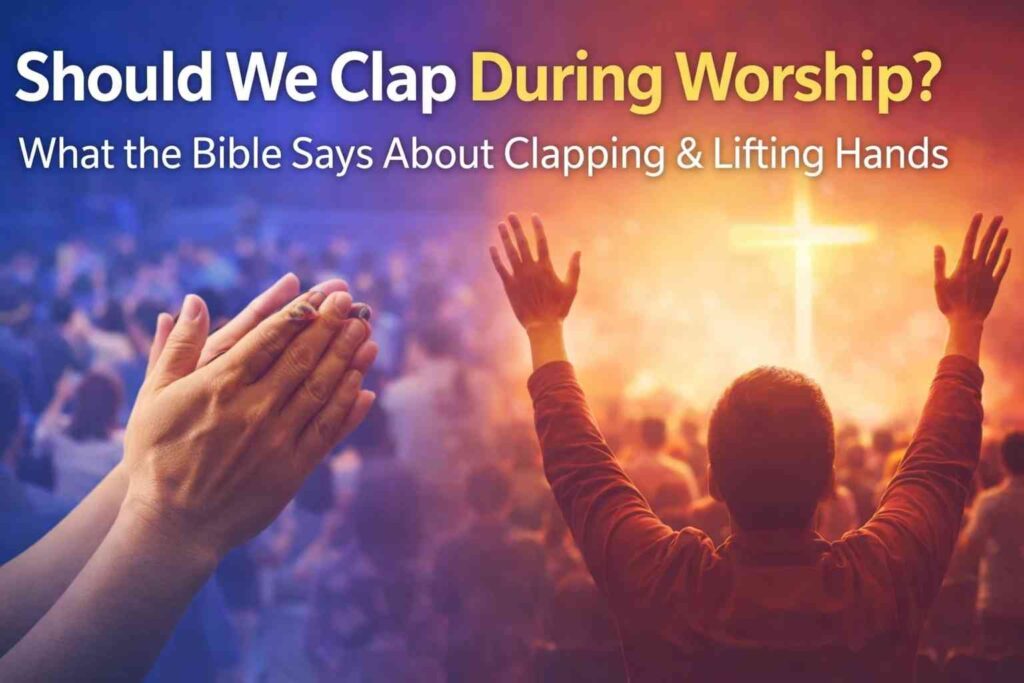
Understanding the difference between applause, praise, and worship helps believers approach God in a way that honors Him according to Scripture.
Understanding True Worship
The Bible teaches that worship is primarily a spiritual expression directed toward God, not merely a physical reaction to events. Jesus explained this clearly:
John 4:23–24 – “The hour cometh, and now is, when the true worshippers shall worship the Father in spirit and in truth: for the Father seeketh such to worship him.”
True worship comes from the spirit of a person, expressed through reverence, words of adoration, prayer, and heartfelt devotion to God.
Another example of biblical worship is the lifting of hands before God:
Psalm 141:2 – “Let my prayer be set forth before thee as incense; and the lifting up of my hands as the evening sacrifice.”
Get instant dream insight with our Free Dream Interpretation App
Here, lifting hands symbolizes reverence, surrender, and devotion toward God.
Related: What is the Book of Life?
What Does Clapping Represent?
Clapping is commonly understood as applause. It is typically a sign of approval, excitement, or celebration. When people clap, they are often responding emotionally to something that has happened.
For example:
- People clap after a performance.
- Crowds clap to celebrate achievements.
- Congregations may clap when a miracle or testimony is shared.
While clapping may express joy or excitement, it does not automatically mean worship or praise.
What the Bible Says About Clapping
The Bible does mention clapping:
Psalm 47:1 – “O clap your hands, all ye people; shout unto God with the voice of triumph.”
In this verse, clapping is associated with celebration and triumph. It accompanies shouting and rejoicing before God. However, the verse does not describe clapping as the primary act of worship itself, but rather as a celebratory response.
Therefore, clapping can be seen as a response to God’s victory, rather than the essence of worship.
Related: What is the Baptism of The Holy Spirit?
The Lifting of Hands and the Evening Sacrifice
One of the clearest biblical expressions of worship is the lifting of hands before God. This action is deeply rooted in Old Testament temple worship and carries profound spiritual meaning.
Psalm 141:2 – “Let my prayer be set forth before thee as incense; and the lifting up of my hands as the evening sacrifice.”
In the Old Testament, the evening sacrifice was offered daily in the temple as a burnt offering to God (Exodus 29:38–41). It was a sacred moment when priests presented an offering before the Lord as a symbol of devotion, atonement, and dedication.
David draws a spiritual parallel between this temple practice and personal worship. Instead of bringing an animal sacrifice, he asks that:
- His prayer be like incense rising before God
- The lifting of his hands be accepted like the evening sacrifice
This reveals an important truth: physical expressions in worship can symbolize deeper spiritual devotion. When believers lift their hands before God, it represents:
- Reverence and honor toward God
- Surrender and humility
- A spiritual offering of devotion
- A heart reaching toward God
Unlike applause, which is directed outward as a reaction to events, lifting hands is directed upward toward God as an act of worship.
In the New Testament era, believers no longer offer animal sacrifices, but they present spiritual sacrifices:
Hebrews 13:15 – “By him therefore let us offer the sacrifice of praise to God continually, that is, the fruit of our lips giving thanks to his name.”
Thus, lifting hands in prayer and worship reflects the same heart of devotion that the evening sacrifice symbolized in the temple.
The Danger of Replacing Worship with Habit
Sometimes, church practices become habits rather than intentional acts of worship. If believers assume that clapping alone is praise, they may unintentionally neglect deeper expressions of worship that the Bible emphasizes.
True worship involves:
- Words of praise
- Songs from the heart
- Prayer
- Thanksgiving
- Reverence
- Lifting hands in surrender
- Worship in spirit and truth
Worship should always be rooted in understanding God’s Word, not simply cultural practices or traditions.
Related: Is Betting a Sin?
When Is Clapping Appropriate?
Clapping is not wrong. It can be a natural human response to joy or celebration. For example, believers may clap:
- When celebrating God’s victory
- After hearing a powerful testimony
- In joyful moments during a service
However, it is important to recognize that clapping itself is not the same as praising or worshiping God.
The Heart of Worship
Ultimately, worship is not defined by outward actions alone but by the condition of the heart. God desires worship that flows from a sincere spirit of love, reverence, and devotion.
When believers worship God with understanding, their expressions—whether singing, praying, lifting hands, or rejoicing—become meaningful acts that truly glorify Him.
✅ In summary:
Clapping can be a joyful expression of celebration, but the Bible teaches that true praise and worship come from the spirit, expressed through heartfelt devotion, words, songs, prayer, and reverence toward God.