The identity of the 24 elders mentioned in the book of Revelation has sparked countless discussions among Bible scholars and believers for centuries. This fascinating topic appears in Revelation chapter 4, where John describes his heavenly vision and encounters these mysterious figures seated on thrones surrounding the throne of God. Understanding who the 24 elders of Revelation truly are requires careful examination of Scripture rather than assumptions passed down through religious tradition.
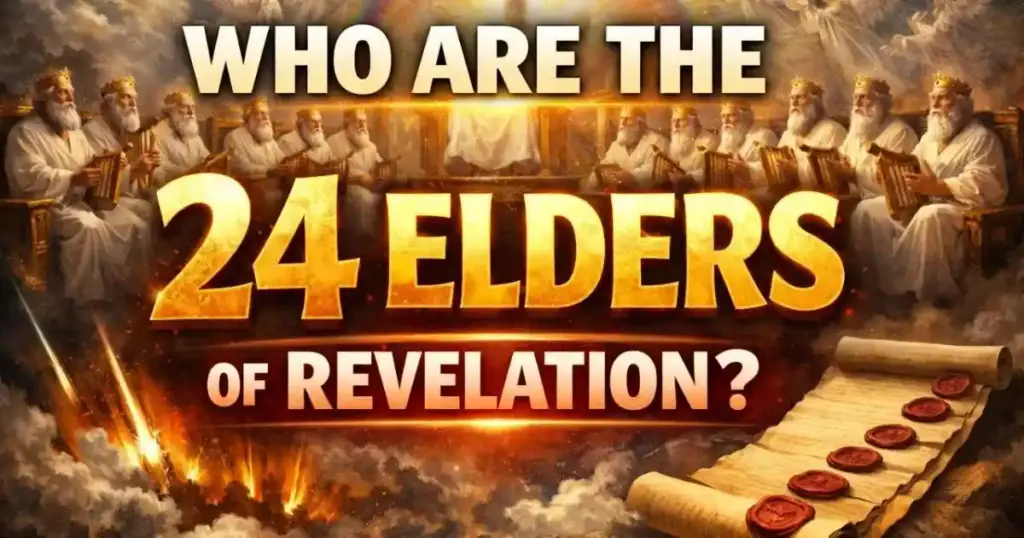
The Popular Theory: A Combination of Israel’s Tribes and Christ’s Disciples
One of the most widespread beliefs about the 24 elders in the book of Revelation suggests they represent a combination of two significant groups from biblical history. According to this school of thought, the twenty-four elders consist of the twelve sons of Jacob (representing the twelve tribes of Israel) combined with the twelve disciples of Jesus Christ. This interpretation has gained considerable traction among many believers and Bible study groups over the years.
However, upon closer examination of the biblical text, several compelling reasons emerge that challenge this popular assumption about the identity of the 24 elders of Revelation.
Related: how will the dead in Christ be raised
Why the Popular Theory Falls Short
The Text Does Not Explicitly State This Interpretation
The first and perhaps most fundamental issue with the twelve tribes plus twelve disciples theory is remarkably simple: the Bible does not directly state this connection. When studying Scripture, particularly prophetic passages like Revelation, maintaining fidelity to what the text actually says proves essential. While believers can certainly draw connections between various biblical passages, building doctrine on unstated assumptions requires extreme caution.
The 24 elders mentioned in Revelation are described sitting on thrones surrounding God’s throne, but no verse identifies them as the combination of Jacob’s sons and Jesus’s apostles. This absence of explicit identification should give pause to anyone firmly committed to this interpretation.
The John Problem: A Living Apostle Viewing the Vision
Perhaps the most compelling argument against the disciples-included theory involves John himself, the very apostle who received and recorded this revelation. Consider the circumstances: John was still alive on earth when he experienced this heavenly vision. He was caught up in the Spirit to witness these events, yet his physical body remained on the island of Patmos.
Get instant dream insight with our Free Dream Interpretation App
If the 24 elders of Revelation included the twelve disciples of Jesus, John would logically be counted among them. Yet nowhere in his detailed account does John recognize himself among these elder figures. Would the apostle not have mentioned such a significant detail if he saw himself seated on one of those twenty-four thrones?
Furthermore, later in the Revelation narrative, one of the elders approaches John to provide explanation about the seals and other mysteries. If John knew these elders personally—if they were indeed his fellow apostles—would he not have identified them by name? Would he not have expressed recognition or provided additional context about their identity? The complete absence of such recognition strongly suggests these elders were beings unknown to John, not his closest companions in ministry.
The Patriarchal Problem: Where Are Abraham, Isaac, and Jacob?
Another significant challenge to the twelve sons of Jacob interpretation involves a question of worthiness and biblical precedence. If God chose to seat the twelve sons of Jacob on heavenly thrones, why would He exclude their more prominent fathers?
Consider the spiritual heritage and significance of Abraham, Isaac, and Jacob themselves. Abraham stands as the father of faith, the one with whom God established His covenant. Isaac represents the child of promise through whom God’s plan continued. Jacob, despite his flaws, received God’s blessing and the name Israel.
These patriarchs hold positions of greater spiritual significance in biblical narrative than Jacob’s twelve sons. Would it not seem more fitting for Abraham, Isaac, and Jacob to occupy such honored positions rather than their descendants? The logic of choosing the sons over the fathers simply does not align with biblical patterns of honor and recognition.
Additionally, if the 24 elders in heaven were meant to represent key Old Testament figures, where would Moses fit? What about Elijah, who was taken to heaven without experiencing death? Or Enoch, who walked with God and was no more? These towering figures of faith seem more likely candidates for such honored positions than the twelve sons of Jacob, several of whom demonstrated serious moral failures during their lifetimes.
What Jesus Actually Said About the Disciples’ Thrones
Many who support the disciples-as-elders theory point to Jesus’s promise in Matthew chapter 19 as evidence. A careful reading of this passage, however, reveals something quite different from what many assume.
Matthew 19:27-30 – The Context of the Promise
In this passage, Peter asks Jesus what the disciples will receive for leaving everything to follow Him. Jesus responds with a remarkable promise found in verse 28: the twelve disciples will indeed sit on twelve thrones. However, the specifics of this promise prove crucial to understanding whether these thrones connect to the 24 elders of Revelation.
Jesus states that when the Son of Man sits on His glorious throne, the disciples will also sit on twelve thrones “judging the twelve tribes of Israel.” This statement contains several important details that distinguish these thrones from those of the twenty-four elders.
First, Jesus describes a specific timing: when the Son of Man sits on His throne in glory. This reference points to the millennial reign, the thousand-year period when Christ will rule on earth. Second, the disciples’ thrones have a specific function: judging the twelve tribes of Israel. This judicial role connects directly to earthly Israel, not the general assembly of all believers throughout history.
The thrones of the 24 elders surrounding God’s throne in Revelation appear in a heavenly setting with no mention of judging the tribes of Israel. These are distinctly different scenarios with different purposes, timeframes, and locations.
Related: Does Satan Have Access to Heaven Today?
Matthew 20:20-23 – The Request for Prominence
Another relevant passage appears in Matthew chapter 20, where the mother of James and John approaches Jesus with a bold request. She asks that her two sons might sit at Jesus’s right and left hand in His kingdom.
Jesus’s response proves particularly illuminating for understanding heavenly positions and thrones. He tells them that sitting at His right and left hand “is not mine to give, but it shall be given to them for whom it is prepared by my Father.”
This statement reveals a profound truth about the identity of the 24 elders of Revelation and all heavenly positions of honor: they are predetermined by the Father. These positions were prepared in advance for specific individuals according to God’s sovereign plan. This predetermined nature means humans cannot simply assume or assign who occupies these positions based on their own reasoning.
What the 24 Elders Are NOT: Revelation 21 Clarified
Some Bible students attempt to connect the 24 elders of Revelation to passages in Revelation chapter 21, which describes the New Jerusalem. A careful reading of this chapter helps clarify the distinction.
The Twelve Gates and the Tribes of Israel
Revelation 21:12 describes the holy city having twelve gates, with the names of the twelve tribes of Israel written on them. This architectural detail commemorates the tribes of Israel but says nothing about thrones or the twenty-four elders. Having one’s name written on a gate differs entirely from being seated on a throne in God’s presence.
The Twelve Foundations and the Apostles
Verse 14 of Revelation 21 mentions that the city wall has twelve foundations, with the names of the twelve apostles of the Lamb written on them. Again, this commemorative inscription honors the apostles’ foundational role in establishing the Church, but it does not equate to being among the 24 elders seated on thrones.
The distinction matters significantly. Just as the seven churches received promises about becoming pillars in God’s house or having names written in various places, these honors differ from throne-seated elder positions. Different rewards and recognitions exist within God’s economy without all being identical.
Who Might the 24 Elders Actually Be?
Given the challenges to popular theories, speculation about the actual identity of the 24 elders of Revelation must remain humble and tentative. Several possibilities exist:
The twenty-four elders could include the patriarchs Abraham, Isaac, and Jacob, given their foundational importance to God’s redemptive plan. They might include Moses, the great lawgiver through whom God established His covenant with Israel. Elijah and Enoch, both translated to heaven, could potentially be among this group.
The prophets of the Old Testament often receive insufficient consideration in discussions about the 24 elders in heaven. Men like Isaiah, Jeremiah, Daniel, and others faithfully proclaimed God’s word and maintained their testimony despite tremendous opposition. King David, a man after God’s own heart and a key figure in Messianic prophecy, might also be counted among such honored individuals.
Ultimately, however, the precise identity remains unrevealed in Scripture. This mystery exists for a reason: God knows who occupies those thrones, and He chose not to specify their identities in His Word.
The Beautiful Promise: We Will Know One Day
Rather than endless debate about the identity of the 24 elders of Revelation, believers can rest in a wonderful assurance. Those who belong to Christ will one day enter heaven and witness these realities firsthand. The mystery that generates so much speculation today will become clear knowledge in eternity.
This promise removes the burden of needing to prove any particular theory. Believers can study, meditate, and consider various possibilities while maintaining appropriate humility about what Scripture does not explicitly reveal.
Lessons from the 24 Elders Discussion
The Importance of Careful Bible Study
The discussion surrounding the 24 elders of Revelation illustrates the importance of careful, text-based Bible study. Popular assumptions, even widely accepted ones, deserve scrutiny against what Scripture actually states. Tradition and popular teaching cannot substitute for personal engagement with God’s Word.
Holding Interpretations with Appropriate Humility
When the Bible does not explicitly identify something, believers should hold their interpretations with appropriate humility. Dogmatic assertions about unclear passages can lead to unnecessary division and distract from clearer, more essential truths.
The Sovereignty of God in Heavenly Matters
Jesus’s statement that certain positions are prepared by the Father for specific individuals reminds believers of God’s sovereignty in all matters, including heavenly rewards and positions. This understanding should produce worship rather than speculation, gratitude rather than entitlement.
Conclusion: Mystery, Faith, and Future Revelation
The 24 elders of Revelation remain one of Scripture’s intriguing mysteries. While popular theories combining the twelve tribes of Israel with the twelve disciples have gained widespread acceptance, careful examination reveals significant problems with this interpretation.
John’s failure to recognize himself among the elders, the absence of the patriarchs in the tribes-only theory, and Jesus’s specific promise about the disciples judging Israel’s tribes during the millennium all challenge common assumptions. The predetermined nature of heavenly positions, as revealed by Jesus, further suggests that human speculation cannot definitively identify these honored beings.
What remains certain is that the 24 elders seated around God’s throne represent individuals of tremendous significance in God’s eternal plan. They worship the Almighty, cast their crowns before Him, and participate in heavenly activities described throughout Revelation.
For believers today, the identity of these elders matters less than the certainty of God’s faithfulness and the hope of eternal life. Those who overcome, who remain faithful to Christ, will one day enter that heavenly realm and understand mysteries that currently remain hidden. Until that day, studying passages about the 24 elders of Revelation can deepen appreciation for God’s Word while maintaining appropriate humility about what He has chosen not to fully reveal.
The discussion continues to inspire Bible students worldwide, encouraging deeper engagement with Scripture and greater anticipation of the glorious future awaiting all who place their faith in Jesus Christ. Whether the twenty-four elders are patriarchs, prophets, or heavenly beings unknown to us, they point to the majesty of the One they surround and worship—the Lord God Almighty, who was and is and is to come.